Ingredients
Method
- Roast the bones and vegetables. Preheat your oven to 200°C (180°C fan). Arrange the beef bones and oxtail in a single layer in a large roasting tin. Scatter the chopped carrots, celery, onions, and garlic around them. Roast for 35–40 minutes, turning halfway, until the bones are deeply browned and the vegetables are charred at the edges. You'll smell a rich, toasty aroma that signals the flavour is building.
- Deglaze the pan. Carefully transfer the roasted bones and vegetables to your largest stockpot. Pour a splash of water into the hot roasting tin and scrape up all the browned bits from the bottom—these are pure flavour. Pour this dark, fragrant liquid into the stockpot. The sizzle and steam as the water hits the hot pan is a sound you'll come to love.
- Add vinegar and water. Place the stockpot on the hob. Add the bay leaves, peppercorns, and apple cider vinegar. Pour in enough cold water to cover the bones by about 5 cm—roughly 2 litres. The water should be cold; this helps the vinegar draw out minerals more effectively during the initial heating stage.
- Bring to a gentle simmer. Turn the heat to medium-high and bring the pot to a gentle boil. As soon as you see small bubbles breaking the surface, reduce the heat to the lowest setting. The surface should barely shimmer, with only an occasional lazy bubble. Skim off any greyish foam that rises in the first 30 minutes—this is impurities and excess fat. The broth will look murky at this stage; don't worry, it will clarify as it simmers.
- Simmer low and slow. Cover the pot with a lid, leaving a tiny crack for steam to escape. Let it simmer for 24 hours. Every 6–8 hours, check the liquid level and top up with more hot water to keep the bones submerged. The kitchen will fill with an evolving aroma—earthy, beefy, and deeply comforting. As the hours pass, the broth will turn a rich, golden-amber colour and develop a subtle wobble when cool, a sign that the gelatin has been fully extracted.
- Strain and season. After 24 hours, the broth should be fragrant and deeply coloured. Set a fine-mesh sieve over a large heatproof bowl or another pot. Carefully pour the broth through the sieve, discarding the bones and vegetables. The liquid should be clear, with a glossy sheen on the surface. Stir in the sea salt while the broth is still hot, allowing it to dissolve completely.
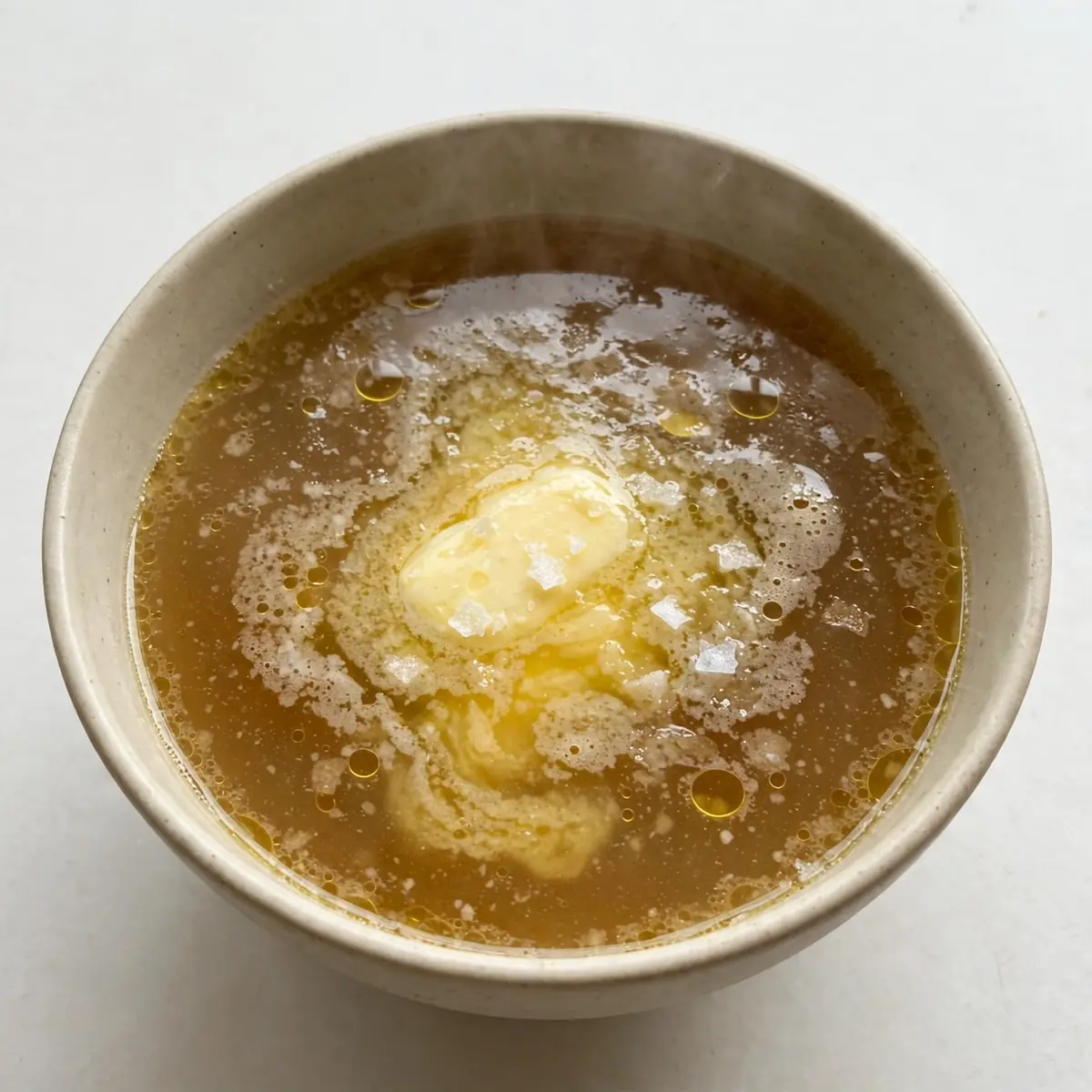
- Add the grass-fed butter. Just before serving, whisk in the grass-fed butter until it melts into the hot broth. The butter enriches the broth with a silky, velvety texture and a subtle, creamy undertone. The colour will shift from clear amber to a slightly opaque, buttery gold. Ladle into mugs and enjoy immediately.
Notes
For maximum flavour and nutrient extraction, ensure bones are deeply browned during roasting. Cold water is crucial for the initial soak with apple cider vinegar to draw out minerals. Skim impurities diligently in the first hour of simmering for a clearer broth. The long, slow simmer is key to a rich, gelatinous end product.