
Weekend Comfort: Pure Beef Bone Broth with Butter
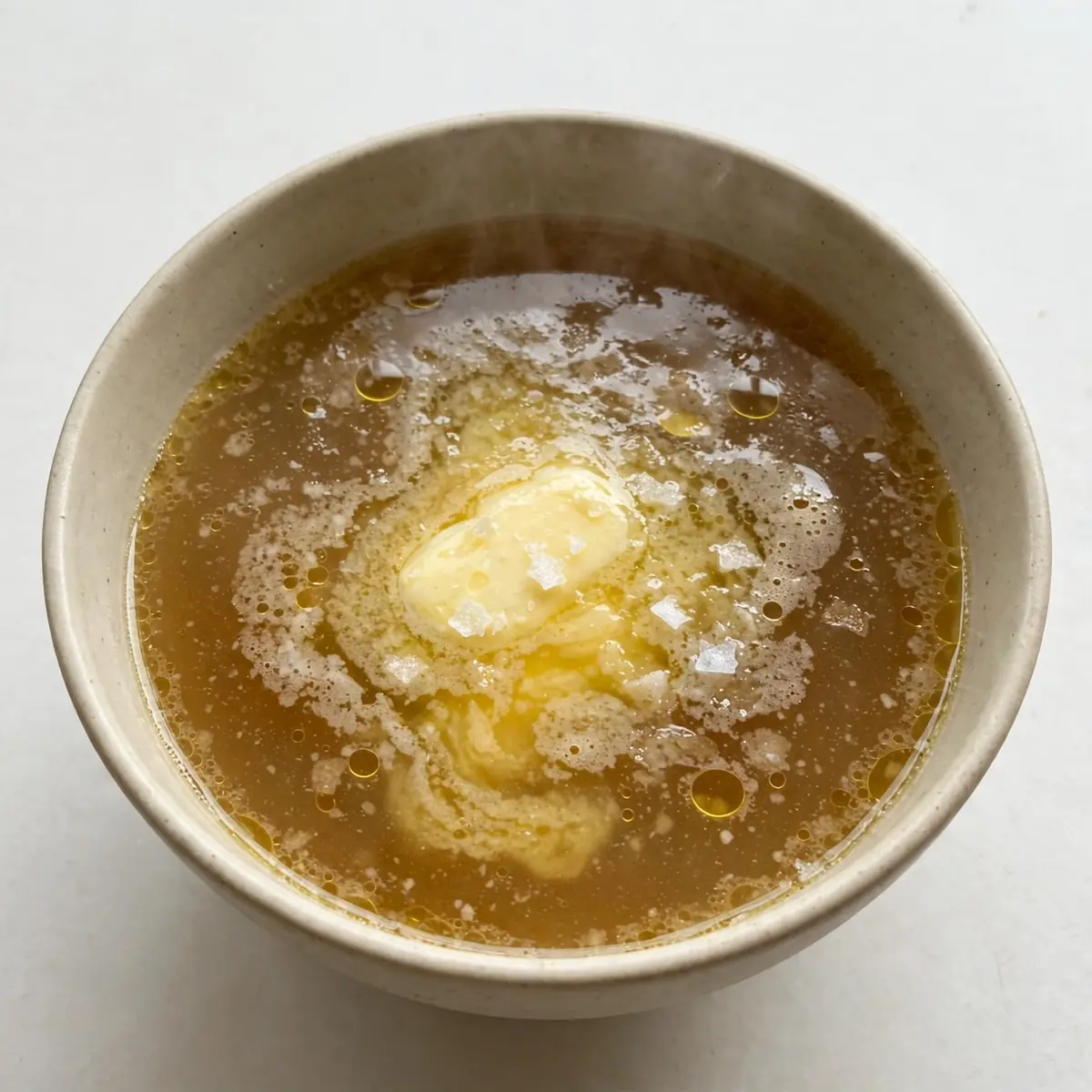
There are few things more soothing on a drizzly Saturday than the low, gentle burble of a stockpot on the stove. This pure beef bone broth with salt and grass-fed butter is my favourite weekend project—a slow, aromatic ritual that fills the entire house with the promise of deep nourishment. I make this at least once a week; it’s become a family favourite, and once you taste the silky richness that a pat of grass-fed butter brings, you’ll understand why.
Recipe Overview
- Prep Time: 20 minutes
- Cook Time: 24 hours (mostly hands-off)
- Total Time: 24 hours 20 minutes
- Servings: 8–10 cups
- Difficulty: Easy (requires patience, not skill)
Why You’ll Love This Pure Beef Bone Broth with Salt and Grass-Fed Butter
- Deep, restorative flavour: Long simmering extracts collagen, minerals, and a rich savoury taste that no shop-bought stock can match.
- Cosy weekend project: This broth demands nothing more than a watchful eye and a lazy day at home—perfect for slow Sunday cooking.
- Incredibly versatile: Sip it straight from a mug, use it as a base for soups, or add it to stews and risottos for an instant flavour lift.
- Nourishing and gut-friendly: The gelatin from the bones supports digestion, while grass-fed butter adds healthy fats and a velvety mouthfeel.
- Budget-friendly: Leftover bones from roasting or inexpensive marrow bones create a luxurious result without breaking the bank.
Ingredients You’ll Need
- 1.5 kg beef marrow bones (ask your butcher to cut them into 5–7 cm pieces)
- 500 g beef shin or oxtail (for extra flavour and gelatin)
- 2 large carrots, roughly chopped
- 3 celery stalks, roughly chopped
- 2 onions, quartered (skin on adds colour)
- 1 head of garlic, halved horizontally
- 2 tablespoons apple cider vinegar (helps draw minerals from the bones)
- 2 bay leaves
- 1 teaspoon black peppercorns
- 2 litres cold, filtered water (plus more for topping up)
- 2 teaspoons fine sea salt, or to taste
- 2 tablespoons grass-fed butter (plus extra for serving)
Tip: For the richest result, use a mix of knuckle bones (packed with collagen) and marrow bones. I always roast the bones first—it deepens the colour and adds a nutty, caramelised note that makes this broth truly special.
How to Make Pure Beef Bone Broth with Salt and Grass-Fed Butter
- Roast the bones and vegetables. Preheat your oven to 200°C (180°C fan). Arrange the beef bones and oxtail in a single layer in a large roasting tin. Scatter the chopped carrots, celery, onions, and garlic around them. Roast for 35–40 minutes, turning halfway, until the bones are deeply browned and the vegetables are charred at the edges. You’ll smell a rich, toasty aroma that signals the flavour is building.
- Deglaze the pan. Carefully transfer the roasted bones and vegetables to your largest stockpot. Pour a splash of water into the hot roasting tin and scrape up all the browned bits from the bottom—these are pure flavour. Pour this dark, fragrant liquid into the stockpot. The sizzle and steam as the water hits the hot pan is a sound you’ll come to love.
- Add vinegar and water. Place the stockpot on the hob. Add the bay leaves, peppercorns, and apple cider vinegar. Pour in enough cold water to cover the bones by about 5 cm—roughly 2 litres. The water should be cold; this helps the vinegar draw out minerals more effectively during the initial heating stage.
- Bring to a gentle simmer. Turn the heat to medium-high and bring the pot to a gentle boil. As soon as you see small bubbles breaking the surface, reduce the heat to the lowest setting. The surface should barely shimmer, with only an occasional lazy bubble. Skim off any greyish foam that rises in the first 30 minutes—this is impurities and excess fat. The broth will look murky at this stage; don’t worry, it will clarify as it simmers.
- Simmer low and slow. Cover the pot with a lid, leaving a tiny crack for steam to escape. Let it simmer for 24 hours. Every 6–8 hours, check the liquid level and top up with more hot water to keep the bones submerged. The kitchen will fill with an evolving aroma—earthy, beefy, and deeply comforting. As the hours pass, the broth will turn a rich, golden-amber colour and develop a subtle wobble when cool, a sign that the gelatin has been fully extracted.
- Strain and season. After 24 hours, the broth should be fragrant and deeply coloured. Set a fine-mesh sieve over a large heatproof bowl or another pot. Carefully pour the broth through the sieve, discarding the bones and vegetables. The liquid should be clear, with a glossy sheen on the surface. Stir in the sea salt while the broth is still hot, allowing it to dissolve completely.
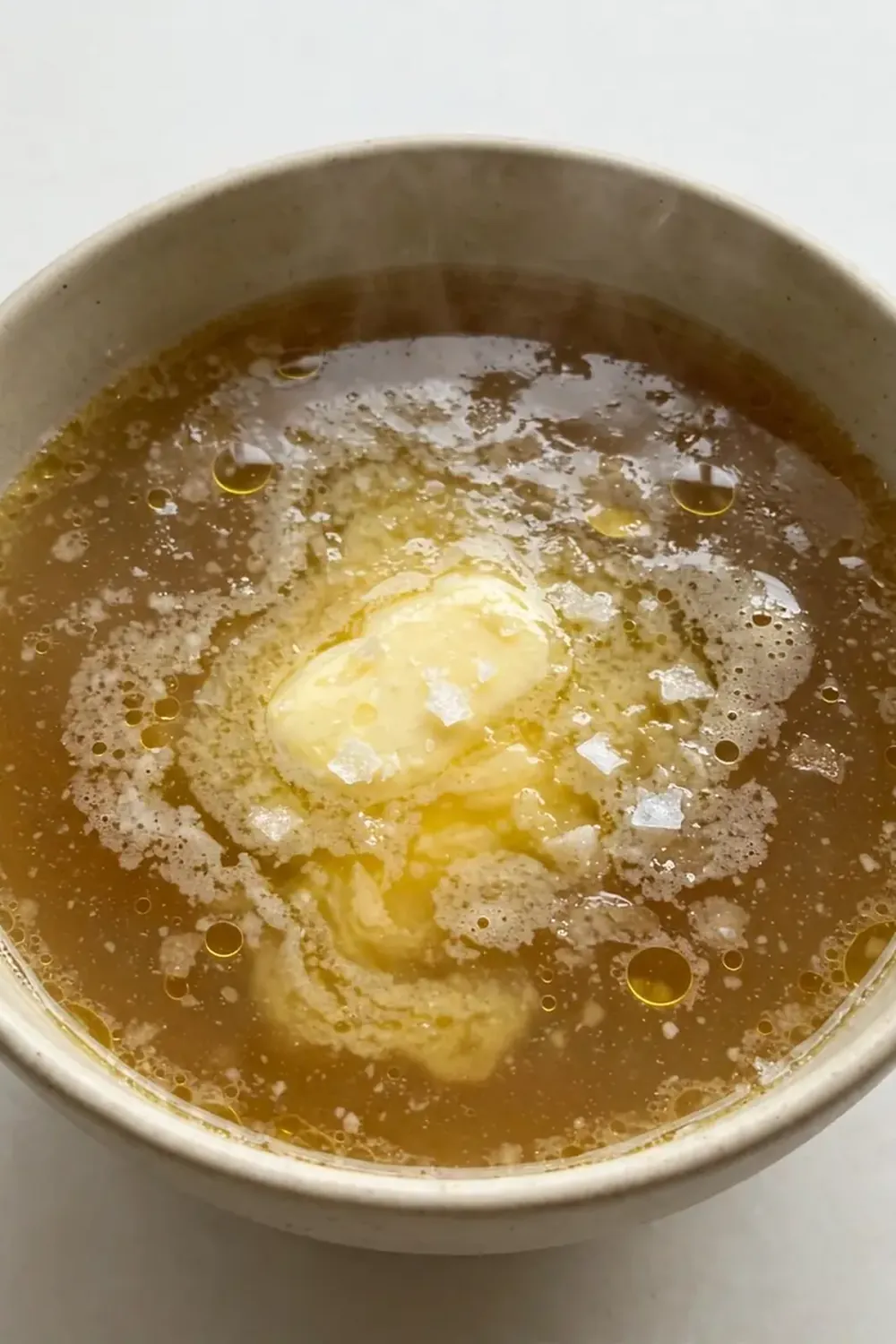
- Add the grass-fed butter. Just before serving, whisk in the grass-fed butter until it melts into the hot broth. The butter enriches the broth with a silky, velvety texture and a subtle, creamy undertone. The colour will shift from clear amber to a slightly opaque, buttery gold. Ladle into mugs and enjoy immediately.
Tips From My Kitchen
- Always roast the bones first. This is non-negotiable for achieving a deep, complex flavour. Raw bones produce a pale, weak broth with a flat taste. Roasting caramelises the natural sugars in the marrow and creates a rich, savoury base that’s the foundation of a truly excellent broth.
- Use apple cider vinegar—and add it early. The acid in the vinegar helps break down the connective tissue in the bones, releasing gelatin and minerals into the water. Adding it at the very beginning, before the water gets hot, gives it time to work its magic. You won’t taste any vinegar in the finished broth; it evaporates during the long simmer.
- Keep the heat low. A vigorous boil will emulsify fat into the broth, making it cloudy and greasy instead of clear and silky. You want the surface to barely tremble—a few tiny bubbles rising every few seconds. If you see rapid bubbling, your heat is too high. Adjust the hob accordingly.
- Top up with hot water only. Adding cold water to a simmering pot will shock the bones and slow down extraction. Always use a kettle to boil water and add it hot. This keeps the temperature steady and the extraction process continuous.
- Don’t skip the skimming. The greyish foam that rises in the first hour is impurities and excess fat. Removing it ensures a cleaner, clearer broth with a more refined flavour. Use a wide, shallow spoon and be patient—it takes just a few minutes and makes a noticeable difference.
- Let it cool properly. After straining, allow the broth to cool to room temperature before refrigerating. This prevents the growth of bacteria and helps the natural gelatin set the broth into a wobbly, jelly-like consistency. A good broth will set firmly when chilled—a sign it’s packed with collagen.
Delicious Variations to Try
- Spicy Version: Add 2 dried chillies, a thumb-sized piece of fresh ginger (sliced), and 1 teaspoon of turmeric powder to the pot at the beginning of the simmer. The heat and warmth will deepen the broth’s character and give it a gentle kick that’s perfect for cold mornings.
- Vegetarian/Vegan Option: Replace the beef bones with 1 kg of mixed mushrooms (shiitake, portobello, and oyster), 2 sheets of dried kombu seaweed, and a handful of sun-dried tomatoes. Roast the mushrooms alongside the vegetables for the same caramelised depth. Simmer for only 2 hours, then strain and add the butter as usual.
- Different Protein: Use a mix of chicken feet, turkey necks, and lamb bones instead of beef. Each animal brings its own unique fat profile and flavour. Lamb adds a slightly gamey, earthy note; chicken feet are exceptionally high in gelatin and create a wonderfully silky texture.
What to Serve With Pure Beef Bone Broth with Salt and Grass-Fed Butter
- A crusty sourdough loaf, torn into pieces for dipping
- A simple green salad with a lemon vinaigrette to cut the richness
- Fluffy scrambled eggs, finished with a spoonful of the warm broth
- Leftover roasted vegetables, reheated in the broth for an instant soup
- For a complete cosy weekend meal, pair it with Cozy Weekend Crispy Air Fryer Zucchini Fries for a satisfying crunch alongside the silky broth
Still hungry for ideas? You might also love Butter Steak Recipe Juicy Beef, Easy Garlic Butter Beef Cheeseburger Rollups from our sister kitchens.
Frequently Asked Questions
Pure Beef Bone Broth with Salt and Grass-Fed Butter
Ingredients
Method
-
Roast the bones and vegetables. Preheat your oven to 200°C (180°C fan). Arrange the beef bones and oxtail in a single layer in a large roasting tin. Scatter the chopped carrots, celery, onions, and garlic around them. Roast for 35–40 minutes, turning halfway, until the bones are deeply browned and the vegetables are charred at the edges. You’ll smell a rich, toasty aroma that signals the flavour is building.
-
Deglaze the pan. Carefully transfer the roasted bones and vegetables to your largest stockpot. Pour a splash of water into the hot roasting tin and scrape up all the browned bits from the bottom—these are pure flavour. Pour this dark, fragrant liquid into the stockpot. The sizzle and steam as the water hits the hot pan is a sound you’ll come to love.
-
Add vinegar and water. Place the stockpot on the hob. Add the bay leaves, peppercorns, and apple cider vinegar. Pour in enough cold water to cover the bones by about 5 cm—roughly 2 litres. The water should be cold; this helps the vinegar draw out minerals more effectively during the initial heating stage.
-
Bring to a gentle simmer. Turn the heat to medium-high and bring the pot to a gentle boil. As soon as you see small bubbles breaking the surface, reduce the heat to the lowest setting. The surface should barely shimmer, with only an occasional lazy bubble. Skim off any greyish foam that rises in the first 30 minutes—this is impurities and excess fat. The broth will look murky at this stage; don’t worry, it will clarify as it simmers.
-
Simmer low and slow. Cover the pot with a lid, leaving a tiny crack for steam to escape. Let it simmer for 24 hours. Every 6–8 hours, check the liquid level and top up with more hot water to keep the bones submerged. The kitchen will fill with an evolving aroma—earthy, beefy, and deeply comforting. As the hours pass, the broth will turn a rich, golden-amber colour and develop a subtle wobble when cool, a sign that the gelatin has been fully extracted.
-
Strain and season. After 24 hours, the broth should be fragrant and deeply coloured. Set a fine-mesh sieve over a large heatproof bowl or another pot. Carefully pour the broth through the sieve, discarding the bones and vegetables. The liquid should be clear, with a glossy sheen on the surface. Stir in the sea salt while the broth is still hot, allowing it to dissolve completely.
-
Add the grass-fed butter. Just before serving, whisk in the grass-fed butter until it melts into the hot broth. The butter enriches the broth with a silky, velvety texture and a subtle, creamy undertone. The colour will shift from clear amber to a slightly opaque, buttery gold. Ladle into mugs and enjoy immediately.
Notes
I hope this slow, gentle broth becomes a cherished part of your weekend rhythm. There’s something deeply satisfying about tending a pot for a whole day, watching the liquid transform from clear water to a golden, nourishing elixir. If you try it, I’d love to hear how it turned out—leave a comment below and let me know which variation you chose, or share your own twist. Happy simmering, friends.